About OITC, Inc.
Located in Knoxville, Tennessee, Orthopaedic Innovation Technology Center (OITC) Inc. stands as a dynamic and forward-thinking design and consulting group with a remarkable focus on delivering ingenious solutions within the realm of orthopaedics. With a firm commitment to innovation, OITC Inc. serves as a dedicated partner for both companies and surgeons, ushering in a new era of possibilities in the field. Through a blend of cutting-edge technology, extensive expertise, and a deep understanding of orthopaedic needs, the company consistently crafts solutions that redefine industry standards. Whether it’s pioneering medical devices or revolutionizing surgical techniques, OITC Inc. remains at the forefront, driving progress and reshaping the landscape of orthopaedic advancements.
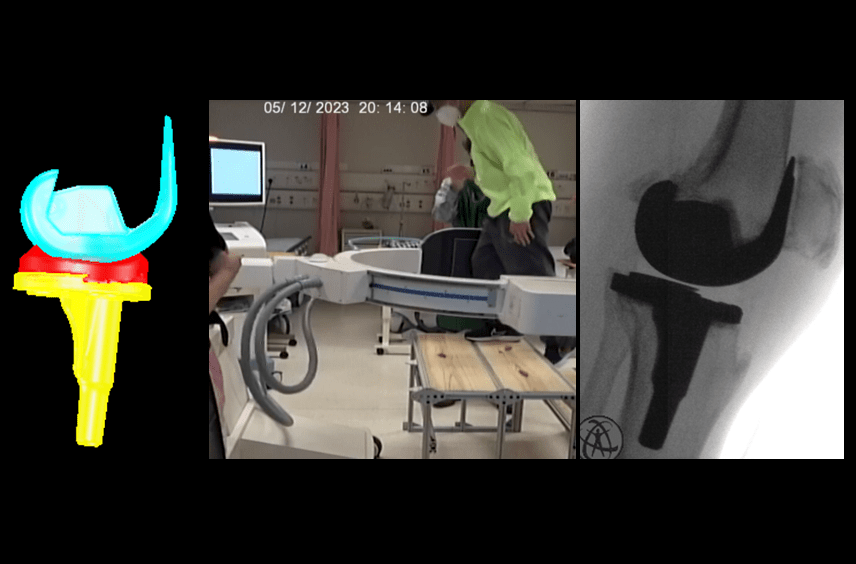
Fluoroscopy Design
Utilizing fluoroscopy evaluation for implanted joints, such as knees and hips, has emerged as a pivotal tool in the realm of orthopaedics. This real-time imaging technique allows orthopaedic surgeons to observe the functionality and positioning of artificial joints with exceptional precision. By employing fluoroscopy, the intricate movements, alignment, and potential issues of these implants can be closely monitored during various ranges of motion. This proactive approach enables surgeons to make informed decisions, ensuring optimal placement and function of the prosthetic joint. Ultimately, fluoroscopy evaluation plays a crucial role in enhancing the success and longevity of implanted joints, contributing to improved patient outcomes and overall quality of life.
Mathematical Joint Modeling
Leveraging mathematical evaluation for implanted joints, such as knees and hips, has become a pivotal strategy in assessing patient outcomes in orthopedics. By applying mathematical models to the data collected from these implants, orthopedic specialists can gain valuable insights into the joint’s performance and the patient’s functional capabilities. These models allow for a quantitative analysis of factors like range of motion, load distribution, and wear patterns, providing a comprehensive understanding of the implant’s behavior within the body. This data-driven approach enables healthcare professionals to tailor treatment plans, optimize implant designs, and ultimately enhance the long-term success of joint replacements. Mathematical evaluation thus empowers orthopedic practitioners to make informed decisions, ensuring patients regain mobility, alleviate pain, and enjoy an improved quality of life.
 Orthopaedic Innovation Technology Center, Inc.